Introduction: The Ghosts of Gadgets Past
In the relentless march of technology, we celebrate the sleek smartphones and powerful processors that define our present. But for every iPhone or Tesla, there are dozens of forgotten marvels—ingenious, bizarre, and often beautiful contraptions that arrived on the scene with a whisper of the future, only to vanish into the attic of history. These weren’t merely bad ideas; they were brilliant visions shackled by the limitations of their era. They failed not for lack of imagination, but because the world simply wasn’t ready for them. Let’s dust off the blueprints and power up these ghosts of innovation to explore seven bizarre tech wonders that were tragically, fascinatingly ahead of their time.
| # | Pick | Best For | Key Strength | Watch-out |
|---|---|---|---|---|
| 1 | Pigeon-Guided Missile | Military guidance systems using animal behavior | Functionally sound biological targeting mechanism | Perceived as unsettling and outclassed by radar |
| 2 | Dynasphere | Futuristic personal transportation concepts | Radical single-wheeled vehicle design | Uncontrollable steering and violent cabin spinning |
| 3 | Edison Talking Doll | Early interactive audio entertainment toys | Pioneering phonograph technology application | Fragile mechanism and terrifying sound quality |
| 4 | Sony Betamovie | Superior quality home video recording | First self-contained camcorder with better specs | Only 20-minute recording capacity limitation |
| 5 | Apple Newton MessagePad | Early personal digital assistant functionality | Pioneering handheld computing with modern features | Poor handwriting recognition and high cost |
| 6 | Cinerama Widescreen Format | Immersive theatrical experience against TV | Revolutionary three-projector immersive display | Extremely expensive and logistically complex |
| 7 | Xerox Alto | Research and development of modern computing | First computer with GUI, mouse, and networking | Never commercialized due to corporate myopia |
7. The Pigeon-Guided Missile (Project Pigeon, 1940s)
The Feathered Guidance System
In the crucible of World War II, famed behaviorist B.F. Skinner proposed a guidance system for missiles that was, frankly, for the birds. His “Project Pigeon” involved placing a pigeon in the nose cone of a missile. The bird would be trained to peck at a screen displaying an image of the target—like an enemy ship. These pecks would, through a series of levers and pulleys, make tiny adjustments to the missile’s flight path, steering it with unsettling avian precision.
Why It Failed: The “Yuck” Factor and Radar’s Rise
While Skinner demonstrated the concept could work in simulations, the U.S. military brass found the idea profoundly unsettling. The notion of entrusting expensive wartime machinery to a pigeon’s pecking was a hard sell. More importantly, the concurrent and rapid development of electronic radar guidance systems made the biological alternative seem archaic before it could even take flight. The project was canceled in 1944, a poignant example of how even a functionally sound idea can be doomed by perception and the breakneck pace of competing, less bizarre tech.
6. The Dynasphere (1930)
The Monowheel of Tomorrow
Imagine a giant, hollow wheel with a driver’s cabin suspended inside its circumference. That was the Dynasphere, a single-wheeled vehicle that looked like it rolled straight out of a Jules Verne novel. Propelled by a small motor, the driver sat within the wheel, theoretically enjoying a smooth, futuristic ride. It was showcased as a revolutionary personal transport solution, promising efficiency and a radical new aesthetic.
Why It Failed: A Nauseating Ride and Zero Control
The Dynasphere suffered from two critical, physics-driven flaws. First, the “gerbiling” effect: any attempt to brake or accelerate would cause the entire cabin to spin violently within the wheel. Second, steering was nearly impossible. The vehicle had a terrifying tendency to continue in a straight line or veer unpredictably. It was less a car and more a directed bowling ball with a terrified passenger inside. The complete lack of practical stability and control ensured it remained a carnival curiosity rather than the future of transit.
5. The Edison Talking Doll (1890)
The Creepy Precursor to Alexa
Decades before vinyl records became mainstream, Thomas Edison applied his phonograph technology to the toy industry. The Edison Talking Doll was a 22-inch tall monstrosity with a miniature phonograph in its torso. For a hefty sum, parents could buy a doll that would recite nursery rhymes like “Twinkle, Twinkle, Little Star” with a thin, metallic, ghostly voice emanating from its chest.
Why It Failed: Nightmare Fuel and Mechanical Fragility
This innovation failed spectacularly for three reasons. The sound quality was abysmal—more like a possessed spirit than a child’s plaything. The dolls were extremely fragile; the delicate internal mechanism was easily broken by casual handling. Finally, and perhaps decisively, they were terrifying. Contemporary reviews described them as “uncanny” and “weird,” making them a commercial flop. Edison had invented interactive audio entertainment, but the execution was so chilling it would take another century for the concept to find a friendly face in devices like Amazon’s Echo.
4. The Sony Betamovie (1983)
The Camcorder That Won the Battle, Lost the War
In the early 80s, capturing home movies required a bulky camera tethered to a separate, heavy recorder slung over your shoulder. Sony’s Betamovie was a revelation: the first self-contained camcorder. It used the superior Betamax tape format, offering better picture and sound quality than its rival, JVC’s VHS system. Technologically, it was the undisputed leader.
Why It Failed: The Fatal Flaw of Recording Time
Sony’s obsession with quality was its downfall. To make the camera compact, they used a smaller Beta tape cassette (Beta L-500) that could only record for 20 minutes. Meanwhile, VHS camcorders, though initially clunkier, could record for 2-3 hours on a single tape. For families wanting to film a school play or a vacation, 20 minutes was laughably inadequate. Sony won the spec sheet but completely misunderstood the market’s primary need: capacity. This critical misstep cemented VHS’s dominance in the home video arena.
3. The Apple Newton MessagePad (1993)
The PDA That Saw 2007 in 1993
Long before the iPhone, Apple tried to reinvent personal computing with the Newton MessagePad. It was a true personal digital assistant (PDA) with features that feel eerily modern: handwriting recognition, note-taking, contacts, a calendar, and even rudimentary email and fax capabilities. It was a pocketable computer a decade before the concept matured.
Why It Failed: The “Billion-Dollar Goof” of Handwriting Recognition
The Newton’s failure is a masterclass in launching a vision before the tech can support it. Its much-hyped handwriting recognition, dubbed “Print Recognizer,” was infamously bad. It famously mangled input, leading to cartoons and public ridicule (a New Yorker cartoon showed it translating “Catching up?” to “Egg freckles?”). The device was also too large, too expensive, and its battery life was poor. While it created the PDA category, its execution was flawed. Apple learned brutal lessons about user experience and miniaturization that it would apply perfectly with the iPhone 14 years later.
2. The Cinerama Widescreen Format (1952)
The Immersive Theater Experience That Was Too Much
To combat the rise of television, Hollywood turned to spectacle. Cinerama was the ultimate expression of this: a widescreen process that used three synchronized 35mm projectors to cast an immense, curved image on a giant, segmented screen. Accompanied by multi-channel surround sound, it offered an immersive experience that modern IMAX can only echo. Films like “This Is Cinerama” were sensory events that made audiences feel like they were flying over the Grand Canyon.
Why It Failed: A Logistical and Financial Nightmare
Cinerama was a victim of its own grandeur. The system was astronomically expensive. Few theaters could afford the costly renovation to install the triple projectors and massive curved screen. The production was also a nightmare, requiring three cameras bolted together and a crew that had to hide from the overlapping sightlines. The visible seams between the three projected images were also a distraction. It was an breathtaking technological achievement that was simply too complex, too costly, and too impractical to become the standard, paving the way for simpler, single-lens widescreen formats like CinemaScope.
1. The Xerox Alto (1973)
The Computer That Invented Everything (And Sold Nothing)
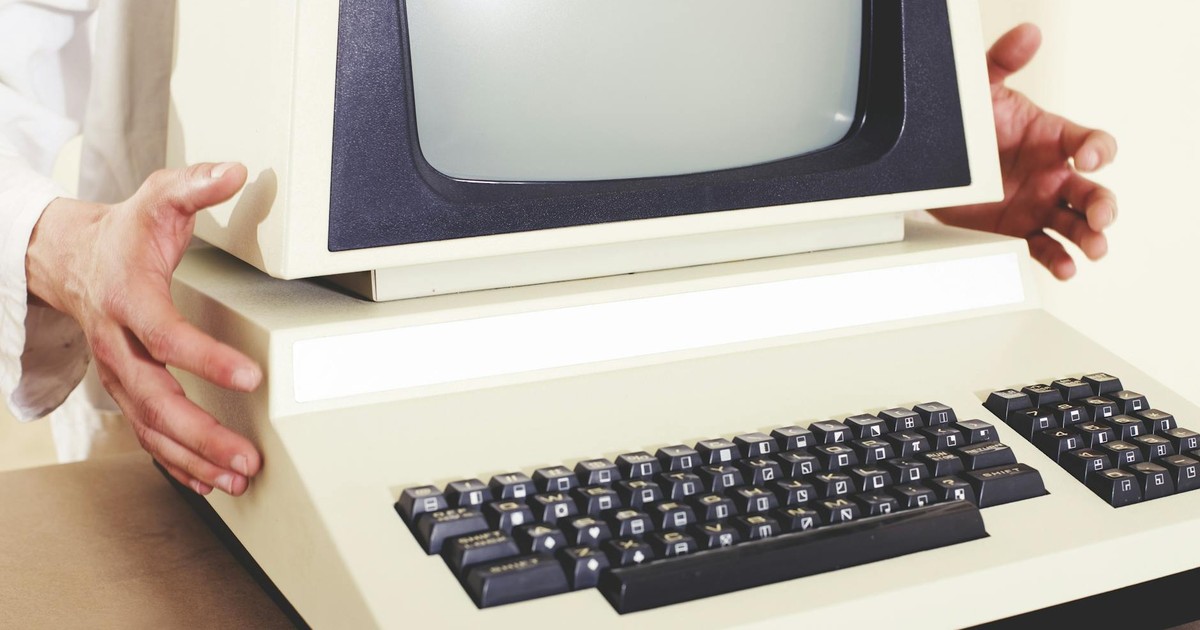
The number one spot belongs to the machine that is perhaps the greatest “what if” in tech history. The Xerox Alto wasn’t bizarre in appearance, but its capabilities were mind-blowingly anachronistic. It was the first computer to feature:
- A graphical user interface (GUI) with windows and icons.
- A mouse for navigation.
- Bitmapped display and WYSIWYG (What You See Is What You Get) editing.
- Ethernet networking for connecting to other computers and printers.
It was, in essence, a modern personal computer—in 1973.
Why It Failed: Xerox’s Failure of Vision
The Alto failed because Xerox did not understand what it had created. The company saw itself as a copier business, not a computer company. The Alto was treated as an expensive research toy at their Palo Alto Research Center (PARC), never seriously commercialized for the mass market. It was only when a young Steve Jobs famously visited PARC in 1979 that the potential was recognized. He saw the GUI and the mouse and, as the story goes, exclaimed, “Why aren’t you doing anything with this? This is the greatest thing! This is revolutionary!” Xerox’s lack of vision gifted the future to Apple (with the Lisa and Macintosh) and Microsoft (with Windows), making the Alto the ultimate king of innovations that were tragically ahead of their time.
Conclusion: The Necessary Seeds of Failure
These seven bizarre and brilliant failures are not mere footnotes. They are vital chapters in the story of progress. Each one represents a bold leap into the unknown, testing the boundaries of physics, market readiness, and human comfort. Their stories teach us that innovation is not a straight line. It is a messy, iterative process where today’s laughable pigeon missile informs tomorrow’s drone AI, and yesterday’s terrifying talking doll sets the stage for voice-activated smart homes.
Failure, in this context, is not an end but a necessary data point. These gadgets failed because they were the first to ask questions no one else was asking, often providing imperfect but illuminating answers. They served as crucial prototypes for the collective imagination, proving what was possible and, more importantly, what needed refinement. So, the next time you effortlessly swipe on your smartphone or ask your speaker for the weather, spare a thought for the ghostly whir of the Dynasphere and the metallic whisper of Edison’s doll—the glorious, bizarre failures that helped pave the way.